On Using AI for Work
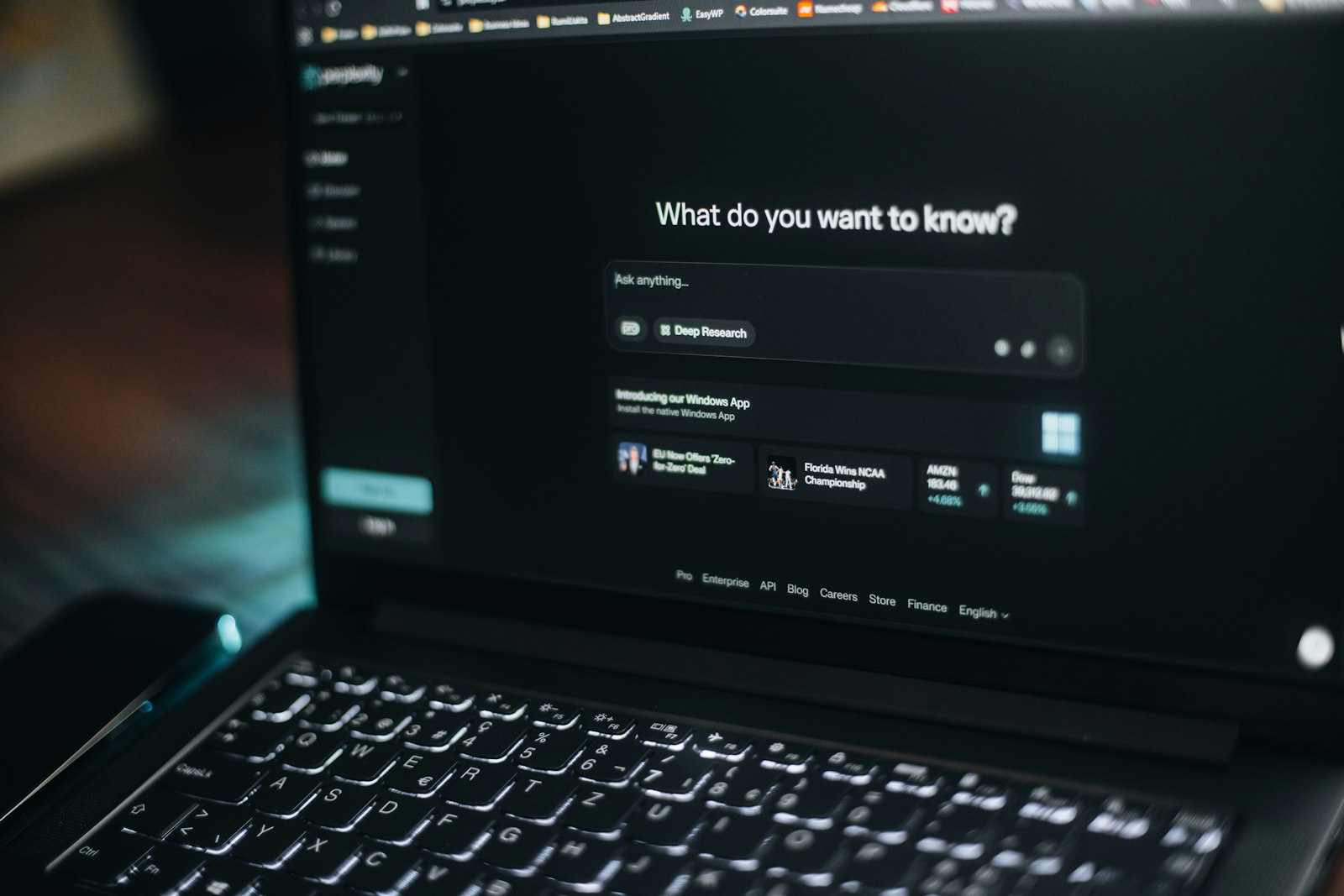
AI has become one of the biggest productivity shifts of the last several decades, and whether people like it or not, it is already changing the way a lot of work gets done.
That does not mean every claim about AI is true. It does not mean every tool is useful. It does not mean every business should rush to replace people, process, judgment, taste, or experience with a prompt box.
But it does mean something has changed, and pretending otherwise is probably not a great long-term strategy.
You can see this shift happening all over the place. Companies are pouring money into AI infrastructure. Software teams are building faster. Creative tools, writing tools, video tools, image tools, and coding tools are all being reshaped around AI-assisted workflows.
Even companies like Micron have shifted heavily toward the AI boom, which has had ripple effects in other markets, including consumer memory prices. That specific issue is probably a subject for another article, but it is a good example of how wide-reaching this AI moment has become.
There is plenty of overhype around AI, but there is also a legitimate reason behind the hype.
In the realm of coding, for example, AI has been genuinely revolutionary. It is not perfect. It makes mistakes. It misunderstands instructions. It can confidently give you the wrong answer. It can produce code that looks correct on the surface but has hidden problems underneath.
But even with all of that, it is still an enormous productivity tool when it is used by someone who knows how to guide it.
Used well, AI can feel like having a junior developer sitting next to you who can help sketch out ideas, write repetitive code, explain unfamiliar concepts, troubleshoot errors, and speed up the process of building something real.
That does not mean you should blindly trust it. You absolutely should not.
But if you already know what you are doing, AI can help you move faster, and that distinction matters.
AI is not limited to coding, of course. It can generate images. It can edit video. It can draft articles. It can write songs. It can summarize research. It can help with marketing, design, data, planning, and dozens of other workflows.
AI can do a lot. The problem is that “can do a lot” is not the same thing as “should do everything.”
Is AI Really Going to Replace Everyone?
One of the dominant narratives around AI is that it is coming for everyone’s job.
I think that is overblown.
Will AI displace some jobs? Absolutely. Will it replace all jobs? Not a chance.
Every major technological shift changes the shape of work. Some industries shrink. Some roles disappear. New roles emerge. People adapt, retrain, resist, complain, embrace, or get caught flat-footed.
That has always been true.
At one point, entire industries existed around problems that technology eventually made less necessary. Before the widespread adoption of automobiles, cities had to deal with the very real, very unpleasant problem of horse manure in the streets. There were people whose work existed because horses were a central part of transportation.
Then cars changed the world.
That transition was not painless for everyone. If your livelihood depended on the old system, the new system probably looked like destruction. But most of us are still thankful we can drive a car to work.
That is the uncomfortable reality of technological change. It creates winners and losers. It improves some things while disrupting others. It is not clean. It is not perfectly fair. But it happens over and over again.
AI will be no different.
Some bookkeeping jobs, data entry jobs, low-level coding jobs, and repetitive administrative roles will be impacted. That does not mean every job disappears. It means the work changes.
And when the work changes, the people who learn how to use the new tools tend to be in a much better position than the people who pretend the tools do not exist.
The Two Bad Ways to Think About AI
When I look at the way people talk about AI, I tend to see two extreme categories.
The first group thinks AI is bad in every form. If AI touched it, they reject it. If AI helped with it, they distrust it. If AI was used anywhere in the process, they assume the final result is lazy, cheap, or fake.
The second group runs in the opposite direction. They use AI for everything, even when it does not make sense. They hand over the thinking, the judgment, the taste, the structure, and the final decision-making to the machine. Some of them are running OpenClaw across a fleet of Mac minis around the clock to automate tasks that did not need to be accomplished in the first place.
Both extremes are wrong.
The best use case for AI right now is not total rejection, and it is not total dependence. The best use case is augmentation.
AI is most useful when it helps you do something you already understand. It can help you write faster, code faster, edit faster, research faster, plan faster, and learn faster. It can help you get to a better result in less time.
But you still need to be in the driver’s seat.
AI Should Augment Skill, Not Replace It
When I talk about using AI for work, I am not talking about vibe coding an entire app you do not understand. I am not talking about publishing a flood of generic SEO articles that were 100 percent written by AI. I am not talking about replacing creative judgment with a prompt.
I am talking about using tools like ChatGPT, Codex, Claude, Gemini, or whatever else fits your workflow to help you achieve a better result faster than you could have without them.
That is a very different thing.
There is no shortage of haphazard, broken, security-problem-riddled, vibe-coded software. That is not the model anyone should be trying to copy. But there is a strong case for using AI as an assistant inside a workflow you already understand.
If you are a developer, AI can help you scaffold ideas, write repetitive code, explain errors, and speed up implementation. If you are a designer, AI can help with brainstorming, structure, copy variations, research, and content planning. If you are a writer, AI can help organize rough thoughts, clean up transcripts, explore angles, and identify gaps. If you are a marketer, AI can help repurpose content, generate campaign ideas, and move faster from raw material to usable assets.
The point is not to remove the human from the work.
The point is to remove some of the friction from the work.
AI Can Also Be a Teacher
One of the most underrated uses of AI is learning.
If you are trying to learn React, Next.js, HTML, CSS, or almost any technical concept, AI can walk you through the process interactively. That is powerful because it turns learning into more of a conversation than a lecture.
An online course is usually one-directional. You watch the lesson, follow the steps, and hope the instructor covered the part you are confused about.
AI gives you the ability to ask follow-up questions. You can ask it to explain a concept more simply. You can ask why something works. You can paste in an error. You can ask for an example. You can ask it to compare two approaches.
That makes learning feel much more interactive.
Again, you cannot trust it blindly. It will make mistakes. But as a learning companion, it can be incredibly useful, especially when your goal is to understand the material instead of simply copying and pasting your way through it.
The Cultural Response to AI Is All Over the Place
One of the most interesting things about AI right now is that there is no unified cultural response to it. Different industries are reacting in completely different ways.
In software development, AI assistance is becoming normal. The question is often not whether someone is using AI, but how much they are using it and whether they are still making sound technical decisions.
There is a meaningful difference between someone using AI to help solve specific coding problems while they remain the architect of the project, and someone who is simply typing “build me an app that does XYZ” into a coding agent and hoping for the best.
In gaming, the response can be radically different. If a game releases and people discover that a small piece of background art, a wall texture, or a painting inside the game was AI-generated, it can immediately turn into a controversy. People pile on. Reddit threads explode. The game gets labeled lazy. The developers get accused of cutting corners.
That reaction is interesting because I do not think it is simply about job displacement.
I think part of the reason people react so strongly is that they have seen so much bad AI work. They have seen bad AI art, bad AI writing, bad AI videos, bad AI apps, and bad AI slop everywhere. So when they see something that looks even vaguely AI-adjacent, they assume the worst.
And sometimes they are right.
A lot of AI-generated creative work is bad. It often lacks taste, specificity, intention, and structure. It can feel hollow because it is hollow. It was not made from a real point of view. It was assembled from a prompt.
But that stigma can also go too far.
When Real Work Gets Called AI Slop
A while back, I was working on a strategy-based trading card game called Meowji. It is a cat-themed, movement-based card game. The idea is lighthearted and cartoony. You create a roster of cats with different abilities and skills, then move them around the board to steal cupcakes from your opponent.
Cartoon cats, cupcakes, and strategy. That is the basic idea.
Because I like creating content and sharing what I am working on, I started posting some of the game design process. I shared rules. I shared card layouts. I shared character illustrations. The cat characters were illustrations I made myself.
My process was simple. I would sketch them on the iPad in Procreate, then bring them into Adobe Illustrator and build the final vector artwork with an Apple Pencil.
This is a style I have been drawing in for more than 20 years.
Then something strange happened.
On YouTube Shorts, people started commenting that the artwork was AI slop. Not just one person. Multiple comments. Some of them got likes. People said the card game was going to fail because the art was clearly AI-generated. They called it lazy. They called it garbage.
What made it especially bizarre was that I had posted full time-lapse videos showing the entire illustration process from beginning to end. I had screen recordings of myself sketching the character, building every shape in Illustrator, and finishing the artwork manually.
Out of curiosity, I replied to one of the comments with a link to the video showing the exact illustration being made from start to finish.
The response was basically, “That does not prove anything.”
At that point, what can you even say?
It did not really bother me because I knew what I had created. But it was fascinating. The anti-AI reaction has become so emotional in some circles that even legitimate digital art can get dismissed as AI slop. The stigma has become so strong that proof of the work is not always enough to change someone’s mind.
That tells me the conversation around AI is still very immature.
The Real Problem Is Bad Work
I do not think people dislike AI only because they are afraid of losing jobs. That is part of it, but I do not think it explains the whole reaction.
A simpler explanation is that people have encountered a lot of bad AI work.
They have read generic AI articles. They have seen weird AI images. They have watched soulless AI videos. They have used broken AI-generated apps. They have seen people flood the internet with low-effort nonsense and call it creativity.
So they associate AI with bad work.
And the em-dashes.
Why — on — earth — is — AI — so — obsessed — with — em — dashes?
That is understandable. But the misuse of a thing should not define the thing itself.
AI can be used lazily. It can also be used thoughtfully. It can be used to replace judgment. It can also be used to sharpen judgment. It can be used to flood the internet with garbage. It can also be used to help skilled people produce better work faster.
Those are not the same thing.
Should You Use AI in Your Job?
For many people, yes.
Not everyone has the same use case. If you work in a restaurant, retail environment, construction job, or another role where most of your work is physical, customer-facing, or location-based, AI may not be central to your day-to-day work.
But if your job involves writing, code, design, marketing, operations, research, numbers, data, planning, or content, I think we are quickly reaching the point where not using AI will put you at a disadvantage.
That does not mean you should let AI do your job for you. It means you should learn where it can help.
Use it to speed up the parts of your work that are repetitive. Use it to explore ideas. Use it to draft, summarize, organize, troubleshoot, and learn. Use it to get unstuck.
But do not hand over your taste. Do not hand over your judgment. Do not hand over your responsibility for the final result.
The right response to AI is not blind enthusiasm. It is also not blanket rejection. The right response is somewhere in the middle.
Do not call everything AI slop just because AI exists, and do not let AI do all of your thinking just because it is convenient.
Use it as a tool. Use it as an assistant. Use it to augment what you already know how to do.
That is where the real value is right now.
AI is not a replacement for skill. It is leverage for people who have skill. And for many types of work, that leverage is going to matter more and more.